Shop Skincare

Relief for Dry, Itchy Skin
Eczema, also known as atopic dermatitis, is a chronic skin condition that causes the skin to become inflamed, itchy, and irritated. It can appear anywhere on the body and can range from mild dryness to more severe, painful patches. At Rêve Dermatology and Aesthetics, we specialize in diagnosing and treating eczema with personalized care and advanced treatment options to help you manage your symptoms and improve the health of your skin.
What Does Eczema Look Like?
Eczema is a condition that affects the skin's barrier, making it difficult for the skin to retain moisture and protect itself from irritants. This leads to inflamed, itchy patches of skin. It can develop at any age, but it often starts in childhood. Eczema is not contagious, but it can be a long-lasting condition that flares up periodically.
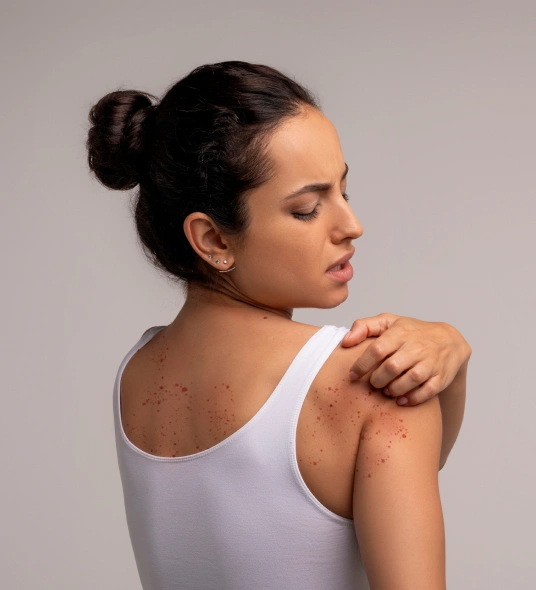
Eczema can vary in appearance, but it typically looks like dry, red, and inflamed patches of skin. In some cases, the skin may become cracked, flaky, or even ooze. These patches can appear anywhere on the body, but they are commonly found on the face, inside the elbows, behind the knees, and on the hands and feet.
What Causes Eczema?
The exact cause of eczema is still not fully understood, but it is believed to be a combination of genetic and environmental factors. Those with a family history of eczema, asthma, or allergies are more likely to develop eczema. Common triggers include:
Common Symptoms of Eczema
Eczema spots can appear anywhere on the body but predominantly occur on the face, neck, hands, or legs. With children, patches can appear on the inner creases of their knees and elbows. Once the skin is scratched, dry spots and open sores with crust could develop and can become infected. Eczema is typically characterized by the following:
- Red, dry, or itchy skin
- Persistent breakouts
- Pus-filled blisters
- Dry, cracked skin
- Skin thickening
- Skin sensitivity due to scratching
- Darkening of the skin surrounding the eyes
- Small, raised bumps
- Rash or swollen skin that varies in color
How is Eczema Diagnosed?
Diagnosing eczema typically begins with a thorough consultation and physical examination. During this process, we’ll:
Review your medical history
This helps us identify any family history of eczema or allergies that may play a role.
Examine your skin
We’ll assess the affected areas to determine the severity and type of eczema.
Rule out other conditions
Eczema can resemble other skin conditions, so we’ll perform tests if necessary to confirm the diagnosis.
Acne Treatments We Offer
We use the latest technologies and medical-grade treatments to tackle acne and prevent future breakouts. Some of the most popular treatments include:
Each treatment is carefully selected based on the severity and type of your acne, ensuring the most effective solution for your skin.
Why Choose Rêve Dermatology & Aesthetics for Acne Treatment?
Personalized care
We provide customized treatment plans that address your unique skin needs.
Experienced professionals
Our team has extensive experience in treating all types of acne, from mild to severe cases.
Advanced treatments
We use state-of-the-art technology to provide the most effective solutions for acne and acne scars.
Ongoing support
We’ll monitor your progress and make adjustments to your treatment as needed, helping you achieve the best results.
Acne doesn’t have to control your life. At Rêve Dermatology and Aesthetics, we’re here to help you achieve clear, beautiful skin with customized treatments that work. Contact us today to schedule your consultation and take the first step towards clearer skin.