Shop Skincare

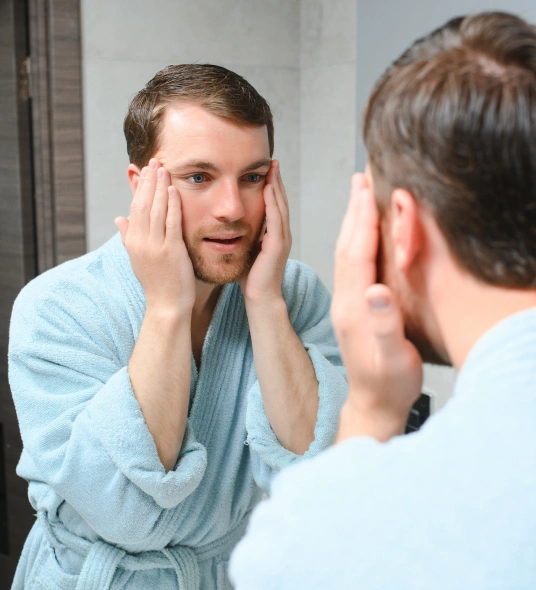
Relieve Facial Redness, Bumps & Visible Vessels
If you’re dealing with persistent redness, visible blood vessels, acne-like bumps, or skin thickening across your face, you may have Rosacea. While there’s no permanent cure, effective treatments are available to help you manage symptoms, restore comfort, and regain confidence in your skin’s appearance.
What is Rosacea?
Rosacea is a long-term (chronic) skin condition that primarily affects the face — especially the cheeks, nose, forehead and chin. It often begins with frequent flushing or blushing and may progress to persistent redness, pimples (papules/pustules), visible tiny blood vessels (telangiectasias), or thickened skin in more advanced cases. Some people also experience symptoms affecting the eyes (ocular rosacea).
Managing Rosacea
While rosacea can’t be fully cured, several effective treatments can ease redness, bumps, and irritation. Here’s what we offer:
Topical treatments
Creams and gels designed to reduce inflammation and improve skin texture can help soothe flare-ups and calm redness. Additionally, certain topical products work by temporarily narrowing blood vessels, which helps reduce visible redness.
Oral treatments
For more persistent cases, oral medications can be used to control inflammation and minimize flare-ups, providing relief for more moderate to severe symptoms.
Laser and light therapy
Advanced procedures like pulsed-dye laser, intense pulsed light (IPL), or electrosurgery can target visible blood vessels and reduce skin thickening, improving the overall appearance of the skin.
Daily skin care and habits
Regularly using mild cleansers, applying sunscreen, and avoiding triggers (such as hot drinks, spicy foods, or extreme temperatures) can significantly reduce the frequency of flare-ups and help manage rosacea.
If you’ve been struggling with redness, visible blood vessels or bumps on your face, you don’t have to accept it as permanent. At Rêve Dermatology and Aesthetics in The Woodlands, TX, we’ll partner with you to manage your rosacea with compassion, clarity and expertise.